Garmin Watch Screen Replacement Cost UK 2026
Direct answer: Garmin screen replacement at celltech is priced per model from our live price list — entry Forerunners sit at the bottom of the range, with AMOLED flagships like the Fenix 8 and Epix Pro at the top. The biggest cost driver is the panel type: AMOLED displays cost more than MIP (transflective) ones. A screen runs from £79.95 on a Forerunner 45 up to £199.95 on an AMOLED Fenix 8 or Epix Pro. Every screen repair is UK-wide tracked mail-in with our 27-month guarantee, and we repair your watch rather than swapping it.
Crack a Garmin and the assumption is always that the watch is finished — Garmin's own route rarely offers a screen repair, it offers a replacement unit, and high-street phone shops decline sports watches outright. Neither has to be the end of it. The display is replaceable, the price is published per model, and the watch comes back as yours, with its activity history and fitted strap intact. What sets the cost is physics, not mystery: Garmin uses two broadly different display technologies, and whether yours is an AMOLED flagship or a transflective MIP unit dictates almost everything about the bill. The exact figure across the range is below, with the AMOLED-versus-MIP split spelt out plainly and the sealed-case bench process walked through. For the full Garmin price picture, see the Garmin watch repair cost hub.
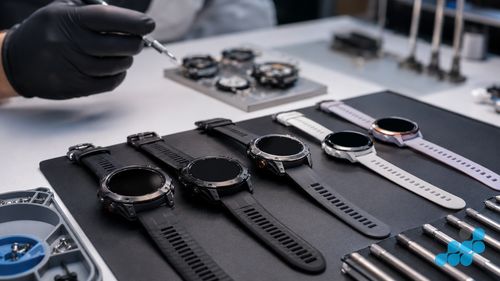
Garmin screen replacement prices by model
Published prices cover the listed display assembly and labour; return delivery follows the order terms. Covered screen work uses the stated 27-month tier, and diagnostic terms are shown for the booked repair. Fresh sealing materials are fitted where required, but original water resistance is not guaranteed. If your exact model is not listed, contact us for a quote.
| Model | Panel type | Screen replacement |
|---|---|---|
| Fenix 8 51mm AMOLED | AMOLED | £199.95 |
| Epix Pro Gen 2 51mm | AMOLED | £199.95 |
| Epix Pro Gen 2 47mm | AMOLED | £189.95 |
| Forerunner 965 | AMOLED | £169.95 |
| Fenix 7 Pro Sapphire Solar | MIP | £169.95 |
| Venu 3 | AMOLED | £149.95 |
| Forerunner 255 | MIP | £129.95 |
| Instinct 3 AMOLED | AMOLED | £129.95 |
| Instinct 2 | MIP | £99.95 |
| Forerunner 45 | MIP | £79.95 |
AMOLED vs MIP: why the price varies so much
The two display technologies answer the same question — show me the data on my wrist — with opposite engineering, and that is why a "Garmin screen" has no single price.
AMOLED panels
Bright, full-colour, glass-fused displays — the panel technology behind the Epix range, the AMOLED Fenix 8 variants, the Venu line and the Forerunner 965 and 265. An AMOLED Garmin display is typically a fused assembly: the OLED panel, the touch digitiser and the protective lens — Gorilla Glass on the standard editions, sapphire on the premium ones — are bonded into one stack, so a crack through the cover usually means replacing the entire display unit rather than a lens alone. The part is dearer, the separation is more delicate, and these repairs sit at the top of the range — the £129.95–£199.95 end of the table.
MIP / transflective panels
Memory-in-pixel, transflective displays — sunlight-readable, extremely low power, and the reason a Solar Fenix, much of the Forerunner running line and the Instinct range run for weeks. A MIP panel is a different, lower-cost stack, and the repair path differs from the AMOLED fused assembly. These sit lower in the price range. If you are unsure which panel your specific model uses, tell us on the booking and we confirm it on the bench rather than you guessing from a spec sheet.
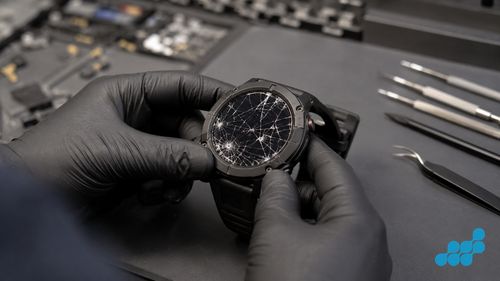
Cracked glass vs damaged display: what is actually broken
Not every cracked Garmin face is a dead display. On a fused AMOLED assembly, a crack through the glass almost always means the whole display stack is replaced, because the glass, digitiser and panel are bonded — there is no separating them without specialist equipment most workshops do not have. On some MIP models the lens and the panel are more separable, which can mean a lens-level repair rather than a full panel swap in the right circumstances. The honest position is that we diagnose on the bench which has actually failed — the glass, the touch digitiser, or the panel beneath — and quote the correct scope. A scratch that is purely cosmetic and a display that is dead under intact glass are very different jobs, and we tell you which one you actually have.
What drives Garmin screen cost
- Panel type. AMOLED fused assemblies cost more than MIP transflective stacks. This is the single biggest swing.
- Model tier. A flagship Fenix 8 or Epix Pro panel costs more than an entry Forerunner 45 panel, reflecting the part cost in the device itself.
- Sapphire vs Gorilla Glass lens. The Sapphire editions of the Fenix and Epix lines wear a harder, costlier crystal than the Corning Gorilla Glass on the standard models; where that lens is bonded into the stack, its specification rides straight into the assembly cost.
- Re-seal and water-resistance. A sports watch is opened, repaired and then re-sealed and pressure-checked where applicable, so the case gasket and reseal are part of the job — not optional extras.
Why DIY screen swaps on sealed sports watches go wrong
The temptation to attempt a Garmin screen at home, armed with a parts-market panel and a video, is understandable on a device this expensive — and it is almost always a false economy. A sports watch is a sealed, pressure-rated instrument: opening it without the correct technique tears the case gasket or scores the sealing surface, and reassembly without a pressure check leaves a watch that looks repaired but has lost the water resistance it was bought for. The display stack itself is fragile — a MIP transflective panel and a fused AMOLED assembly both demand controlled separation, and a slipped tool destroys the replacement panel you just bought. The repair also needs recalibration of the touch layer and a function test of the buttons and sensors that sit behind the display. The bench cost includes all of that, underwritten by the 27-month guarantee; a DIY attempt includes none of it, and a botched re-seal turns a screen repair into a water-damage case at the next swim.
How celltech mail-in screen repair works
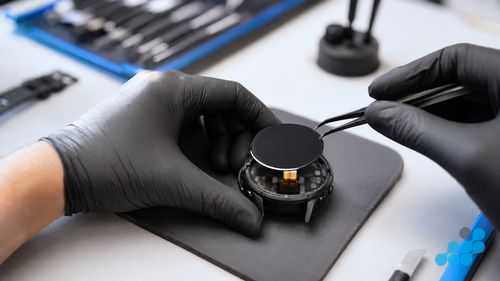
Book at /repair/smartwatch/garmin, pack your Garmin in a small padded box (our how to pack your watch for posting guide covers the specifics), follow the completed-order instructions for inbound carriage, and we diagnose under the stated terms, confirm the exact screen price from our live list, fit the OEM-grade display assembly, re-seal and pressure-check the case where applicable, function-test it, and return it under the delivery terms shown for the order with the 27-month guarantee logged. The service runs entirely by post — you can be anywhere in the UK.
Is replacing the screen worth it vs a new watch?
On a Fenix, Epix, Enduro or upper Forerunner, yes — almost without exception. A £199.95 Fenix 8 AMOLED screen or a £169.95 Forerunner 965 screen is a fraction of a replacement device that retails at several hundred pounds, and the repaired watch returns as yours with its history intact. The honest exception is an entry model (such as a Forerunner 45) where a £79.95 screen approaches the cost of a like-for-like replacement — we diagnose under the stated terms and weigh it against the beyond-economical-repair threshold before you commit. For Apple Watch screen costs for comparison, see our Apple Watch screen and battery guide; for Garmin battery work alongside a screen, see our Garmin battery replacement page.
Frequently asked questions
How much is a Garmin Fenix screen replacement?
A Fenix 8 AMOLED screen is £199.95 and a Fenix 7 Pro Sapphire Solar screen is £169.95, both under the 27-month guarantee. The AMOLED variants sit at the top of the range; the MIP Solar variants sit lower.
Can a cracked Garmin watch screen be replaced, or do I need a new watch?
Replaced, not replaced-with-new. We repair your specific watch — opening the sealed case, swapping the failed display assembly, re-sealing and pressure-checking it — rather than offering a refurbished unit, which is Garmin's usual route.
Why does Garmin screen repair cost vary so much between models?
Panel type is the main driver: AMOLED fused assemblies cost more than MIP transflective stacks. Model tier, sapphire versus mineral lens, and the re-seal all add to it. The table above labels each model's panel type.
What is the difference between an AMOLED and a Solar/MIP Garmin screen?
AMOLED is bright, full-colour and glass-fused — costlier and more delicate. MIP (transflective) is sunlight-readable, very low power and the reason Solar and Instinct models run for weeks. They are different panels with different repair paths.
Does replacing the screen affect my watch's water resistance?
Not when it is done correctly. We re-seal the case and pressure-check it where applicable as part of the screen repair — the reseal is included, not an extra. A botched DIY re-seal, by contrast, is exactly how a screen repair turns into a water-damage case.
Will I lose my activity data if you replace the screen?
A screen replacement is normally confined to the display assembly, but no repair is risk-free. Sync to Garmin Connect before posting.
Can you repair a Garmin Epix or Venu AMOLED display?
Yes — an Epix Pro Gen 2 AMOLED screen is £189.95–£199.95 and a Venu 3 screen is £149.95, both under the 27-month guarantee. AMOLED fused-assembly replacement is core work for us.
Is screen replacement worth it on an older Fenix 6?
Usually yes — a Fenix 6 Pro screen (£139.95) is a fraction of a replacement Fenix. We diagnose under the stated terms and weigh the repair against the watch's value honestly before you commit.