Apple Screen Repair Cost UK 2026: iPhone, iPad & Mac
Direct answer: Apple screen repair cost varies by three factors: the panel technology (the OLED, laminated and high-resolution Retina displays Apple uses across iPhone, iPad and Mac), the screen size, and whether the glass and display are fused into a single assembly. An iPhone or Apple Watch screen sits at the lower end; a MacBook or iPad Pro display assembly sits at the top. All prices below are published in full and standard repairs include diagnostics and a 27-month guarantee.
"How much to fix an Apple screen?" is one of the most common repair searches in the UK, and the honest reason it is hard to answer is that "an Apple screen" stretches from a 1st-gen iPhone SE to a 16-inch MacBook Pro — the same two words covering prices an order of magnitude apart. A cracked iPhone OLED, a chipped iPad laminated display, a MacBook lid with dead rows and a shattered Apple Watch face are four completely different jobs with four completely different part stacks, and bundling them under one quote is exactly how a shop arrives at a vague £"around £200-ish". Below they are separated out: real, published prices across iPhone, iPad, Mac and Apple Watch, the engineering reason a MacBook display dwarfs an iPhone screen, and celltech's tracked UK mail-in service carrying a 27-month guarantee on the glass. For the wider Apple picture, see our Apple repair cost UK hub.
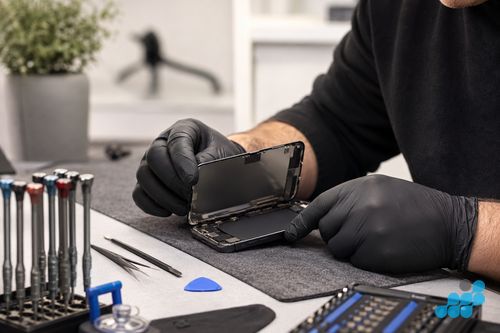
Apple screen repair prices by device
These are representative screen prices for each Apple class — the entry model and the current flagship — so you can see the range. Your exact model's price is on the linked device page.
| Device | Screen repair (from) | Current flagship | Detail |
|---|---|---|---|
| iPhone | Model- and tier-specific current pricing | iPhone screen | |
| iPad (standard) | £39.95 (older) / £139.95 (10th Gen) | £159.95 (11th Gen) | iPad screen |
| iPad Pro | £129.95 (Pro 9.7") | £649.95 (11" M5) / £849.95 (13" M5) | iPad Pro screen |
| MacBook | £189.95 (Pro 13" Unibody) | £369.95 (Air 13" M4) / £619.95 (Pro 16" M5) | MacBook screen |
| Apple Watch | £69.95 (Series 3) | £255.95 (Series 11) / £269.95 (Ultra 3) | Watch screen |
What drives the cost of an Apple screen
- Panel technology. An OLED panel (iPhone flagship, Apple Watch) costs more than the LCD used in older or entry devices. A laminated, high-resolution Retina panel (iPad Pro, MacBook) costs more again.
- Lamination. On modern iPads and MacBooks the glass and the display are fused into one assembly, so a crack means replacing the whole unit — not just a glass sheet. That fusing is the single biggest reason an iPad Pro screen outcosts a standard iPad.
- Size. A 16-inch MacBook panel simply contains more material than a 6-inch iPhone panel, and the larger the panel the higher the parts cost.
- Calibration features. True Tone, ProMotion and P3 colour calibration have to be preserved across the new panel — see our True Tone after screen repair note.
Apple screen part terms explained
Screen terminology is used inconsistently. Ask whether the quoted part is new genuine Apple, refurbished original or compatible, and confirm display construction, refresh rate, calibration, parts-message behaviour and guarantee terms for the exact model. For the iPhone-specific detail, see our soft OLED vs hard OLED and how to tell a genuine iPhone screen guides.
iPhone vs iPad vs Mac vs Watch screens
iPhone screens
iPhone screen pricing depends on the exact model and selected screen tier. The iPhone screen replacement cost page reads its full per-model table from the current repair catalogue.
iPad screens
A standard iPad screen (9th/10th Gen) is around £139.95–£159.95; a laminated iPad Pro display is a different job entirely — £649.95 for an 11" (M5) and £849.95 for a 13" (M5) — because the Pro panel is fused. See iPad screen repair cost and iPad Pro screen replacement.
MacBook & Mac screens
MacBook screens run from £189.95 (Pro 13" Unibody) to £619.95 (Pro 16" M5), with a current Air 13" (M4) at £369.95. The full breakdown is on our MacBook screen replacement cost page and the wider MacBook repair cost guide.
Apple Watch screens
Apple Watch screens start at £69.95 (Series 3) and run up to £269.95 (Ultra 3), with the Ultra premium reflecting the sapphire face and titanium chassis. See Watch screen & battery replacement and the Apple Watch repair guide.
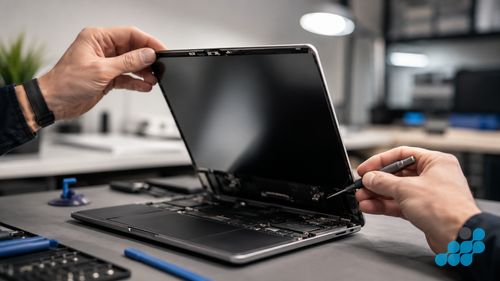
How celltech screen mail-in works
Book online for your device class — iPhone, iPad, MacBook or Apple Watch — and choose a suitable tracked inbound service. Return delivery follows the order terms. Standard screen repairs include diagnostics, and we confirm the price before work. See our packing guide and mail-in repair guide.
Is an Apple screen repair worth it?
It often is when the display is the only material fault and the confirmed repair price is sensible against the device's condition and replacement value. Qualifying standard screen work carries the published 27-month guarantee tier. Separate board or liquid damage changes the calculation, so we diagnose under the stated terms before you commit.
What an Apple screen replacement involves
The bench process explains why an iPhone screen, an iPad screen and a MacBook display cost such different amounts to replace — the technique splits along the same fault lines as the price.
iPhone — separable OLED
On OLED iPhones the bonded front assembly is released, removed and replaced as a unit. Compatible original front-sensor and earpiece components are retained or transferred where the model and their condition allow. Expected True Tone, Repair Assistant and Parts & Service History behaviour depends on the selected part and model and should be confirmed before booking.
iPad Pro & MacBook — the fused laminated assembly
On a modern iPad Pro or MacBook the glass and display are normally supplied as a fused laminated assembly, so a crack generally means replacing the whole unit. The larger, higher-resolution assembly and model-specific construction are major cost drivers. Any configuration or calibration support is confirmed for the selected part rather than assumed.
Apple Watch — sapphire and titanium
An Apple Watch screen replacement works at miniature scale, and Ultra models can involve dearer assemblies and more exacting reassembly. Opening a watch can compromise its original water-resistance rating, which cannot be guaranteed after repair. The selected part and test scope are confirmed for the order.
Repair, replace, or claim on insurance?
Screen repair is often sensible when the rest of the device is healthy and the confirmed repair price is comfortably below replacement cost. Qualifying screen work carries the 27-month standard guarantee under the published celltech terms. On an older iPhone, iPad or MacBook, also consider battery condition, software support and any board or liquid damage before deciding.
AppleCare+ or third-party accidental-damage cover is an alternative route; check the current excess, parts policy and effect on future premiums. Our repair vs insurance claim comparison sets out the trade-offs. If there is separate board or liquid damage alongside the cracked glass, we diagnose it under the stated terms and explain whether it has crossed the beyond-economical-repair line before you commit. For a cracked-but-working screen, our fix now or wait guide helps with the timing.
Apple screen repair FAQ
How much does the Apple Store charge for a screen repair vs celltech?
The Apple Store quotes flat out-of-warranty screen rates per model. celltech publishes per-model component prices and works by tracked post, so we are typically cheaper — especially on older models Apple classes as "vintage". We confirm the exact figure before any work starts.
Why does a MacBook display cost so much more to replace than an iPhone screen?
Three reasons: a MacBook panel is far larger (more material), it is a high-resolution laminated Retina assembly rather than a phone-sized panel, and the glass and display are fused — so the whole unit is replaced, not just a glass sheet. An iPhone screen is smaller and, on older models, separable.
What type of Apple replacement screen will I receive?
The exact part varies by device and selected repair. We confirm whether it is new genuine Apple, refurbished original or compatible, along with the expected display and configuration behaviour, before approved work begins.
Will True Tone and ProMotion still work after a screen replacement?
It depends on the exact model, selected part and supported configuration process. Confirm the expected True Tone and ProMotion result for the order; our True Tone after screen repair note explains the considerations.
What is the difference between a soft OLED and a hard OLED iPhone screen?
A soft OLED (flexible substrate, like Apple uses) is thinner, brighter and more accurate; a hard OLED (rigid glass) is a cheaper aftermarket construction that is dimmer and less colour-accurate. The full comparison is in our soft OLED vs hard OLED guide.
Can a cracked screen cause further damage if left unrepaired?
Yes. A crack can let in dust and moisture, and on laminated displays a crack with underlying bleed will spread across the panel. A working-but-cracked screen is also a safety and usability issue. Replacing it promptly protects the device and its resale value.
What guarantee do you offer on Apple screen repairs?
Qualifying screen repairs carry the 27-month standard tier under the published celltech terms.
Is it worth replacing the screen on an older iPhone, iPad or MacBook?
Usually yes, if the rest of the device is healthy. A screen repair on a four-year-old Apple device is a fraction of a replacement and carries the same 27-month guarantee. The exception is a device with cascading board or liquid damage — we diagnose under the stated terms and tell you straight.