Apple Repair Cost UK 2026: iPhone, iPad, Mac, Watch & AirPods
Direct answer: Apple device repair cost in the UK depends on three things: the device class (an Apple Watch screen costs far less than a MacBook display), the specific part that has failed, and whether the fault is board-level rather than a straightforward swap. Every price below is published — not a "from" teaser behind a quote form — and standard repairs include diagnostics and a tiered guarantee up to 27 months.
If you own an Apple device in the UK and something has gone wrong — a cracked iPhone screen, a MacBook that will not charge, an Apple Watch with a dead battery, a muffled AirPod — you have essentially two choices: the Apple Store (or an Apple Authorised Service Provider), or an independent specialist such as celltech. Both will fix the device. The differences are in price, in the range of repairs on offer, in what happens to your data, and in the length of the guarantee. This page is the single honest, Apple-wide price hub most UK repairers refuse to publish: real figures for every Apple device class, pulled from our live price list, framed against what the Apple Store typically charges, with the trade-offs made plain.
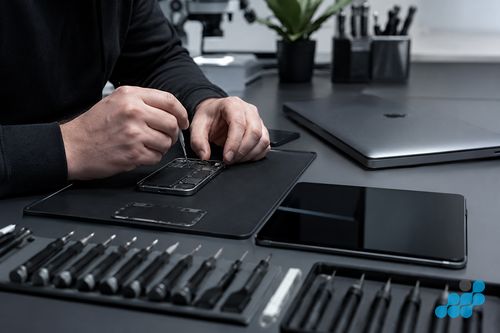
Apple repair prices at a glance
These are headline entry figures for each Apple device class — the lowest-priced representative model in the family for a screen and a battery — so you can see the landscape before drilling into your specific device. Every figure is from our live price list and is shown in full on the linked spoke page.
| Device class | Screen (from) | Battery (from) | Full price list |
|---|---|---|---|
| iPhone | £39.95 | £39.95 | iPhone screen · iPhone battery |
| iPad | £39.95 | £44.95 | iPad screen · iPad Pro screen |
| MacBook / Mac | £189.95 | £99.95 | MacBook screen · MacBook repair guide |
| Apple Watch | £69.95 | £39.95 | Watch screen & battery |
| AirPods | — | £39.95 (audio/bud) | AirPods repair & cleaning |
iPhone liquid-damage treatment is published at £89.95 and includes diagnostic and ultrasonic cleaning. Any additional board-level faults (logic-board failures or charging-IC faults) are diagnosed under the stated terms and quoted after we have seen the device. Those repairs carry a 120-day board-level guarantee. See what board-level repair involves.
iPhone repair cost
iPhone prices vary by model, repair scope and selected part tier. Charging-port and connector repairs use the connector warranty tier; eligible screens, batteries, cameras and rear-glass repairs use the repair-specific cover shown at booking. Start at the iPhone screen replacement cost page or the current iPhone battery price list; if the back is cracked, see iPhone back glass replacement. For a screen-by-screen breakdown across every Apple device, see our Apple screen repair cost guide.
iPad repair cost
iPad repair splits sharply by line. A standard iPad screen (9th/10th Gen) sits around £139.95–£159.95, while a laminated iPad Pro display is a different proposition — a Pro 11" (M5) is £649.95 and a Pro 13" (M5) is £849.95 — because the Pro panel is fused and higher-resolution. iPad batteries start around £44.95 on older models. See the iPad screen repair cost guide and, for the Pro specifically, our iPad Pro screen replacement page.
Mac & MacBook repair cost
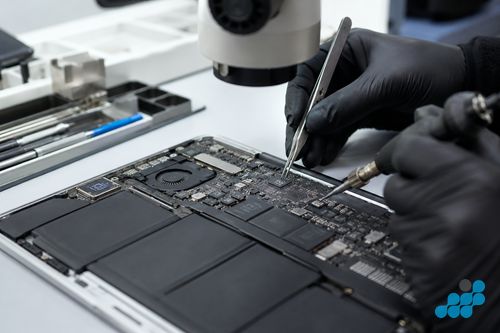
MacBook screens range from £189.95 (Pro 13" Unibody) up to £619.95 (Pro 16" M5), with a current MacBook Air 13" (M4) at £369.95. MacBook batteries run £99.95–£179.95. Component-level board repair can retain the existing storage rather than replacing the whole board, but no repair is risk-free for files, so back up first wherever possible. Screens and batteries carry 27 months; logic-board, microsoldering and liquid-damage work carries 120 days. Full detail is in our MacBook repair cost guide.
Apple Watch repair cost
Apple Watch screens start at £69.95 (Series 3) and run up to £269.95 (Ultra 3); batteries start at £39.95. The Ultra models carry a premium — the sapphire and titanium construction and the deeper water-resistance seals make the work more involved. See our Apple Watch screen & battery replacement page and the wider Apple Watch repair guide; Ultra owners should see Apple Watch Ultra repair cost.
AirPods repair & cleaning cost
AirPods faults are usually a single dead bud, a failing case, lost noise cancellation or ear-wax blockage — rarely the whole set. A single bud starts at £49.95 (1st gen) and tops out around £89.95 (Pro 2), a charging case starts at £59.95, and a professional cleaning service starts at £44.95. Far cheaper than replacing the set. See the AirPods repair & cleaning cost page and the AirPods repair guide.
HomePod & Apple TV
HomePod and Apple TV faults are less common and more bespoke — usually a power supply, a speaker driver or a logic-board issue. Rather than publish a generic figure, we diagnose and quote these individually. Contact us for a quote and we will confirm the exact price before any work starts.
celltech vs the Apple Store: what you actually save
Three honest differences are worth understanding before you decide.
- Price and scope. Compare celltech's published model-specific repair with a current manufacturer quote for the same device, fault, parts, delivery and warranty terms.
- Data. On Apple Silicon Macs, storage is integrated with the logic board. Repairing the existing board may preserve access to data, but no repair can guarantee that outcome. Back up where possible and see what happens to your data during a repair.
- Guarantee. celltech uses repair-specific tiers: 27 months on qualifying standard repairs, 9 months on charging ports and connectors, and 120 days on board-level, microsoldering and liquid-damage work. Eligibility and exclusions follow the published terms.
How celltech Apple mail-in works
celltech is a UK-wide postal repair specialist. Book online for your device class (iPhone, iPad, MacBook, Apple Watch or AirPods), choose a suitable tracked inbound service, and follow the order-specific return terms. Standard repairs include diagnostics; we confirm the price before work. See our mail-in repair guide.
Is it worth repairing your Apple device?
In most cases, yes — Apple hardware holds value and a component repair returns it to full life for a fraction of a replacement. The honest threshold is whether the device has a single failed part (repair) or cascading board and liquid damage (often beyond economical repair). We diagnose under the stated terms and tell you straight. See our guidance on when a device is beyond economical repair and our broader refurbished vs repaired vs new comparison.
What the common Apple repairs involve
The price table reads more usefully when you know what sits behind each line. The Apple device classes share a workshop but differ in technique, and those differences explain the price spread from a £39.95 iPhone SE screen to a £619.95 MacBook Pro display.
iPhone — bonded display assembly
On OLED iPhones the bonded front assembly is released and replaced as a unit. Compatible original front-sensor and earpiece components are retained or transferred where the model and their condition allow. Expected True Tone, Repair Assistant and Parts & Service History behaviour depends on the selected part and model and should be confirmed before booking.
iPad & Mac — fused laminated assemblies
This is where the price climbs. On a modern iPad Pro or a MacBook the glass and the display are fused into a single laminated assembly, so a crack means replacing the whole unit rather than a glass sheet. Separating a fused assembly demands more controlled heat and care, the larger the panel the more surface area has to release evenly, and on MacBooks the work proceeds with the battery disconnected for safety. The board-level path is where celltech genuinely diverges from Apple: where the Store swaps the whole logic board — taking your soldered SSD with it on Apple Silicon — we diagnose and replace the individual failed component under a microscope, keeping your data and usually your money. See our Mac repair vs Apple cost comparison and our choosing a Mac repair service guide.
Apple Watch & AirPods — miniature-scale work
An Apple Watch screen replacement works at miniature scale — warming, separating, resealing against water ingress — with the Ultra's sapphire face and titanium chassis demanding a dearer part and more exacting reassembly. AirPods work is usually single-component — one dead bud, a failing case, or an ear-wax blockage — resolved for far less than replacing the set. The parts-grade reasoning across all classes is on our OEM vs aftermarket vs genuine parts page.
How Apple repair economics break down by class
A useful way to read the prices above is by the ratio of repair cost to device value, because that ratio is what makes a repair rational or not.
- iPhone. A screen or battery repair often makes sense when it is the only material fault and the confirmed cost is reasonable against the handset's condition and replacement value.
- Apple Watch. Standard Series screens and batteries are cheap relative to a replacement; the Ultra sits higher because of its sapphire and titanium construction, but a repair still beats a new Ultra by a wide margin.
- iPad. Standard iPads are economical to repair; iPad Pro displays are the one to weigh carefully, because the fused panel makes the job expensive relative to an entry iPad — though still a fraction of a new Pro.
- Mac. MacBook screens and batteries are worth repairing on any machine still meeting your needs; the real value is board-level work, where a component repair routinely saves hundreds versus Apple's whole-board swap. See our Mac repair vs Apple comparison.
Repair, replace, or claim on cover?
For a single-part fault, compare the confirmed repair price with the device's condition, age and replacement cost. If you already have AppleCare+ or accidental-damage cover, check its current excess, parts policy and effect on future premiums before choosing a route. Our repair vs insurance claim comparison explains the trade-offs, and our refurbished vs repaired vs new guide helps if you are also weighing replacement.
The honest exception is cascading board or liquid damage, where a single failed part has become a chain of failures. There the calculus changes, and rather than quote optimistically we diagnose under the stated terms and tell you plainly whether the device has crossed the beyond-economical-repair threshold — the diagnostic is the safeguard against paying for a repair that cannot hold.
Apple repair FAQ
How much does the Apple Store charge for a repair vs celltech?
The Apple Store quotes flat out-of-warranty rates and, for board faults, often replaces the whole module or unit. celltech publishes per-model component prices and repairs the specific failed part, so on batteries, screens and especially logic-board work we are usually markedly cheaper. We confirm the exact figure before any work starts.
Are celltech's parts genuine Apple parts?
Part provenance varies by device and selected repair. We confirm whether the supplied part is new genuine Apple, refurbished original or compatible, plus any expected configuration or parts-message behaviour, before approved work begins.
Will repairing my device with an independent void my remaining Apple warranty?
Under UK consumer law, third-party repair does not automatically void a manufacturer's warranty. A manufacturer can only refuse cover if the third-party work caused the specific fault. If your device is still under Apple warranty, it is usually sensible to use Apple for covered faults.
Can celltech repair a water-damaged iPhone, Mac or Watch?
Sometimes. Liquid-damage work can include cleaning and component-level diagnosis, but feasibility, data access and recovery outcome depend on the extent of corrosion. This specialist tier carries 120 days of repair-specific cover. See our first steps for a water-damaged device, and if your iPhone won't power on at all, work through our iPhone won't turn on fixes before assuming the worst.
How does celltech's UK-wide postal repair service work?
Book online, choose a suitable tracked inbound service, and keep the carrier receipt. We diagnose and quote before work; return delivery follows the terms shown for the order. Full detail is in our mail-in guide.
What tiered guarantee do you offer on Apple repairs?
Covered screens, batteries, cameras, buttons and speakers use the 27-month tier; charging ports and connectors use 9 months; board-level, microsoldering and liquid-damage work uses 120 days. Eligibility and remedies are set out in the published celltech terms.
Is it worth repairing an older iPhone, iPad or Mac rather than replacing it?
Usually yes, provided the device has a single failed part and still meets your needs. A battery or screen repair on a four-year-old device is a fraction of a replacement and comes with a long guarantee. The exception is cascading board or liquid damage — we diagnose under the stated terms and weigh it honestly against replacement.
What is microsoldering and when does an Apple repair need it?
Microsoldering is component-level logic-board repair — diagnosing and replacing the individual failed chip, capacitor or connector under a microscope rather than swapping the whole board. An Apple repair needs it when a fault is on the board itself: a no-power Mac, a charging-IC failure, or liquid damage. See our microsoldering guide.