Direct answer: A Fitbit battery replacement in the UK costs from our published Fitbit price list — typically toward the lower end of Fitbit repair prices — with premium models (Sense 2, Versa 4) costing more than entry trackers (Inspire). Fitbit batteries commonly start to fade after roughly 18–24 months of daily use; celltech replaces the sealed cell and re-seals the case to help restore battery life, with a fixed quote first and UK-wide tracked mail-in backed by a 27-month guarantee.
The single thing that makes a Fitbit owner decide the tracker is "dying" is the cell — a device that ran for days now lasting hours, cutting out mid-workout, or refusing to hold an idle charge. What most owners do not realise is that a sealed Fitbit battery can be replaced: the glued lithium cell comes out, a matched cell goes in, and the case is re-sealed, returning something close to the original 18–24 months of run-time for a fraction of a new tracker. The per-model battery price is below, and just as importantly, so is the way to confirm it really is the battery before you pay. For the full Fitbit picture, see the full Fitbit repair price guide.
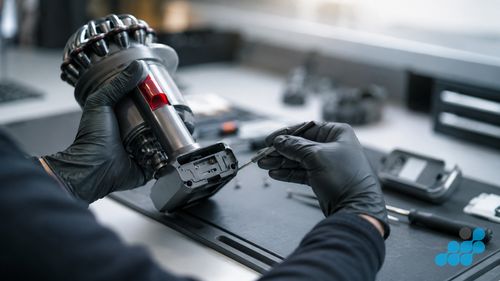
How much a Fitbit battery replacement costs
A Fitbit battery replacement runs from our published Fitbit price list and is one of the cheaper Fitbit repairs. The premium watches sit at the top — a Sense 2 battery is £74.95 and a Versa 4 is £64.95 — while the entry Inspire trackers sit at the bottom at £39.95. The Charge family and the slim Luxe fall in between. Every figure is published up front, fitted by post with parts, labour and return arrangements governed by the order terms, and every battery replacement carries the 27-month guarantee. If your exact model is not listed, contact us for a quote.
| Model | Battery replacement (from £) |
|---|---|
| Sense 2 | £74.95 |
| Sense | £69.95 |
| Versa 4 | £64.95 |
| Versa 3 | £59.95 |
| Versa 2 | £54.95 |
| Versa Lite | £49.95 |
| Versa | £44.95 |
| Charge 6 | £54.95 |
| Charge 5 | £49.95 |
| Charge 4 | £44.95 |
| Charge 3 | £39.95 |
| Inspire 3 | £39.95 |
| Inspire 2 | £39.95 |
| Inspire HR | £39.95 |
| Luxe | £49.95 |
Why Fitbit batteries fade after 18–24 months
The cell inside a Fitbit is tiny — these are slim trackers, not phones — and it works hard every single day: charged on the dock, then drained by continuous heart-rate sensing, overnight sleep tracking and a display that wakes at every wrist-turn. A lithium cell loses a little usable capacity with each charge-and-drain round, and on a Versa or Charge worn around the clock those rounds stack up quickly. After roughly 18–24 months the loss crosses from imperceptible to obvious, because when the starting capacity is small even a modest drop is the gap between a watch that lasts five days and one that taps out by lunchtime. Heat speeds it along — a tracker left on a radiator, in a hot car or strapped on through a sauna ages faster — and so do repeated flat-to-empty discharges. None of that touches the rest of the device: the processor, the display and the sensors are all fine, and a fresh cell hands back the run-time you started with.
Battery or charger? Check this first
Before you pay for a battery, rule out the charger — because the proprietary magnetic charging dock is a notorious failure point that mimics a dead battery. A quick diagnostic:
- Does it charge at all? If it shows no charging response no matter how you seat it, suspect corroded dock pins or oxidised contact pads — a charging repair, not a battery.
- Does it charge fully but then drain fast? That points to the battery — it accepts charge but cannot hold it.
- Gradual or sudden? A battery fade is usually gradual (worse week by week); a sudden "won't charge" is more often the dock or contacts.
If your symptoms point to the dock or contacts rather than the cell, that is a cheaper connector repair — see is it the charger, not the battery? for the full walk-through before you commit to a battery.
What a sealed-battery replacement involves
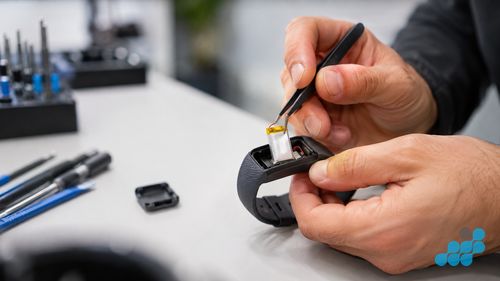
A Fitbit is bonded shut for water resistance, so the cell cannot be reached from the outside — there is no door, no clip, no slide-out tray. Replacing it means warming the case adhesive until it releases, parting the bonded body — usually the display tile or the rear — without cracking the thin chassis, then unclipping and lifting the glued lithium cell whole, because a punctured wearable cell is a genuine fire risk and is never prised. A matched-capacity cell goes in, fresh adhesive and a new gasket go down, and the body is closed back to its original water-resistance rating. The battery reporting is re-checked afterwards so the percentage read-out tracks the new cell honestly rather than the old one's worn curve. It is fiddly, parts-hungry bench work — the kind most high-street counters wave off — which is exactly why a cut-price "battery swap" with no re-seal is a false economy: you trade a tired cell for a tracker that no longer survives a shower.
The battery job itself follows a settled routine. We confirm the run-time fault, match it to the published price for the model, and only then open anything — so the figure you were quoted is the figure on the invoice. Gentle, even heat loosens the factory bond, and the body is eased apart along its seam with the display kept whole, since on most Fitbits the panel has to come off to reach the cell beneath. The old cell is disconnected at the board, lifted off its adhesive intact and set aside — never pierced. The replacement is bonded down, reconnected, and the charge controller is reset so the tracker re-learns a full, fresh capacity instead of inheriting the old worn profile. A new gasket and adhesive close it up, a pressure check confirms the seal held, and a full charge-and-drain proves the restored run-time before the device is boxed. That is the work a 27-month guarantee is written against; a two-minute swap earns no such promise.
A replacement cell is intended to improve run-time, but the result depends on the device, software and other hardware. Lithium cells continue to age with use. The booked tracker is repaired rather than deliberately exchanged, but re-pairing, reset or data loss can still occur; synchronise supported health data before service where possible.
Is a Fitbit battery replacement worth it?
On the premium watches and the mid-range, decisively yes. A £54.95–£74.95 battery on a Sense, Versa or Charge is a fraction of a new tracker, restores the run-time you bought the device for, and keeps your data and setup. The entry Inspire line is the only borderline case: a £39.95 battery is still cheap in absolute terms, but weigh it against the current price of a fresh entry tracker, especially if the device has a second fault. We will tell you plainly when a replacement tracker makes more sense than a repair. For comparison, see Apple Watch battery costs for comparison.
How mail-in battery repair works
Book online, arrange suitable tracked inbound postage using the order instructions, and review the return-delivery terms confirmed for the order.
FAQ
How much does it cost to replace a Fitbit battery in the UK?
From £39.95 on the Inspire trackers up to £74.95 on the Sense 2, with the Versa and Charge families in between. The exact price is set by your model and is published up front.
Can a Fitbit battery be replaced, or is it sealed for good?
It can be replaced. The cell is glued inside a sealed body, so the job is a careful teardown with a re-seal — not a swap — but the cell does come out and a matched one goes in, restoring close to the original run-time.
How do I know if it's the battery or the charger?
If it charges fully but drains in hours, it is the battery. If it shows little or no charge response, it is more likely corroded dock pins or oxidised contacts — a charging repair. See our charging guide for the full diagnostic before paying for a battery.
How long should a Fitbit battery last?
Roughly 18–24 months of daily wear-and-charge cycles before the fade becomes obvious. After that the run-time drops noticeably — which is the cell wearing out, not a fault with the rest of the device.
Will my Fitbit be water-resistant again after a battery swap?
Replacement sealing adhesive is fitted where required, but no independent repair can guarantee the original water-resistance rating. Treat a repaired device as not waterproof.
Will I lose my health and activity data?
No. We service your own tracker rather than exchanging it, so your steps, sleep, heart-rate trends, watch faces and phone pairing are all untouched.
Can you replace a Fitbit battery by post?
Yes — post is the only way we work. Choose suitable tracked inbound postage; return delivery follows the order terms.
What guarantee comes with a Fitbit battery replacement?
27 months.
Ready to send yours in? Book a Fitbit battery replacement.