Direct answer: Redmi Note screen replacement in the UK runs from £79.95 for an older Note 11 up to £149.95 for a Note 14 Pro+, with the current Note 14 at £109.95. The Redmi Note is the highest-volume Xiaomi line in the UK, so these are the screen prices most owners are searching a fixed price for. Every figure is published below — no quote form — and each screen carries a 27-month guarantee.
The Redmi Note line out-searches the Xiaomi flagship numbers in the UK — it is the volume seller, bought online, and a cracked screen is by some distance its most common repair. What catches owners out is that the Note line is not one panel but two: the Pro models carry an AMOLED display, the standard Notes an LCD, and the part, the price and the fitting differ accordingly — a detail most generic phone-screen pages blur into a single figure. The exact fitted price for every Redmi Note generation, that AMOLED-versus-LCD split, and the tracked mail-in route are below. For the wider family, see our Xiaomi repair cost UK hub and our main Xiaomi screen replacement page.
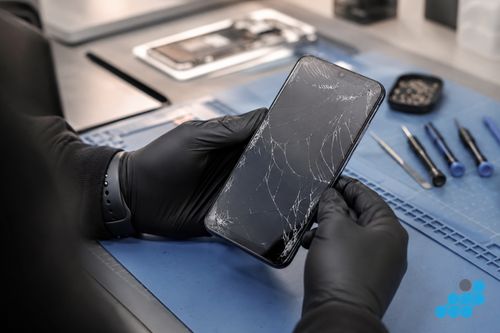
Redmi Note screen replacement prices 2026
| Model | Screen replacement (fitted) |
|---|---|
| Redmi Note 14 Pro+ | £149.95 |
| Redmi Note 14 Pro | £129.95 |
| Redmi Note 14 | £109.95 |
| Redmi Note 13 Pro+ | £139.95 |
| Redmi Note 13 Pro | £119.95 |
| Redmi Note 13 | £99.95 |
| Redmi Note 12 Pro+ | £129.95 |
| Redmi Note 12 Pro | £109.95 |
| Redmi Note 12 | £89.95 |
| Redmi Note 11 Pro+ | £119.95 |
| Redmi Note 11 Pro | £99.95 |
| Redmi Note 11 | £79.95 |
Diagnostics are free on standard screen repairs. Every screen carries a 27-month guarantee. If your exact Note variant is not listed, contact us for a quote.
AMOLED vs LCD within the Note line
The Redmi Note line is not all one display type. The Pro and Pro+ models use AMOLED panels (dearer, with the green-line OLED failure mode to watch for); the standard Note models often use LCD. That mix is part of why a Note 14 Pro+ (£149.95) costs more than a Note 14 (£109.95) and far more than a Note 11 (£79.95). The panel type, not the generation alone, drives the price.
Genuine vs OEM-grade vs aftermarket
On a volume line like the Note, the temptation to drop in a bargain panel is everywhere — and it is exactly what we refuse to do. We fit OEM-grade displays matched to the original (AMOLED on the Pro and Pro+, LCD on the standard Notes), and you hear the grade from us before any tools come out. The cheap aftermarket alternative dims the AMOLED, drifts the colour and rarely lasts the length of the guarantee. More on grades in our parts-grade guide.
Signs your Redmi Note screen needs replacing
- Cracked glass — a Note carries a large 6.6–6.7in display, so there is more glass to fracture and the split runs fast across that span.
- A green vertical line on the Pro and Pro+ AMOLED models — a hardware OLED failure that no update repairs (the standard LCD Notes do not show it).
- Black patches or spreading bleed — the panel is failing.
- Patches where touch stops responding — a damaged digitiser.
- Ghost touch — phantom presses after a fall; see our Xiaomi faults guide.
Redmi Note screen repair by post
Book at /repair/phone/xiaomi, post your Redmi Note using suitable tracked postage arranged from the order instructions and select compensation cover appropriate for the device, and we diagnose under the stated terms, confirm the price, fit the OEM-grade panel, test, and return it under the delivery terms shown for the order. Full detail in our Xiaomi repair by post guide.
Is a Redmi Note screen repair worth it?
Almost always, yes. Run the numbers and the Note is where repair-versus-replace tips most decisively in the whole Xiaomi family: a screen between £79.95 and £149.95 sits far below a like-for-like new handset, and the 27-month guarantee carries it for over two years. Spend a hundred-odd pounds on a phone you already know, or several hundred on its replacement — for most Note owners that is not a close call. For how the Note stacks up against other Android brands, see our Android screen replacement guide.
What a Redmi Note screen replacement involves
A Redmi Note is not one repair on repeat — it divides along the AMOLED-versus-LCD line drawn above, and on a display this large that divide sets both the bench technique and a fair slice of the price.
Opening the device and separating the panel
Each Redmi Note has its display fixed down with a factory adhesive bead, so the panel is eased free only after controlled heat on the platen softens that bead all the way round — and on a 6.7in Note that is a lot of perimeter to release evenly. A standard LCD Note is a layered glass-digitiser-LCD-backlight stack that comes off the frame as the glue yields. A Pro or Pro+ runs a thinner, more delicate AMOLED — the curved-edge Pro+ especially — its OLED layer sitting straight under a bonded cover lens, so the lift is done with fine picks tracking the edge inward, clear of the flex ribbons. That curved Pro+ panel inherits the flagship's lamination headache: the bond must hug the curve exactly or the edge peels inside weeks.
Fitting the replacement and re-lamination
With the broken display out and the chassis wiped clean of residue, the correct OEM-grade panel for that model is laid onto fresh optically clear adhesive and bonded back under uniform pressure. A cheap copy shows itself fast: on the AMOLED Pro and Pro+ it dims at the top end and skews colour; on the LCD Notes it loses brightness evenness across that big panel. You hear which part is going in before we start. The grade reasoning is on our OEM vs aftermarket vs genuine parts page.
Function testing before return
Before return under the order-specific delivery terms, the Note's whole display path must pass: touch over every zone, brightness top and bottom, colour uniformity and the ambient light sensor. A green line on a new Pro or Pro+ panel means a faulty part, not a finished repair — the exact thing the 27-month guarantee is there to absorb. The green-line fault is explained on our screen flickering and line faults guide.
How the Redmi Note compares across Android
The Redmi Note is the volume mid-range of the Xiaomi family, and its screen pricing lines up with the mid-range of the other Android brands we repair by post.
- Against the OnePlus Nord. Both are flat-panel mid-range lines with widely available parts, so their screen prices sit in a similar band; the Nord runs slightly higher because there is no budget tier beneath it. See our OnePlus Nord screen replacement page.
- Against Nothing. Nothing Phone is flagship-tier only, so there is no direct Note competitor; a Nothing screen sits higher than any Note. See our Nothing Phone screen replacement page.
- Against Samsung. Samsung's Galaxy A mid-range competes directly with the Note for the same buyer. See our Samsung screen repair cost guide.
Bottom line: a Redmi Note screen is one of the better-value repairs in the UK Android market, for the simple reason that the parts are everywhere. The cross-brand picture is on our Android screen replacement cost hub.
Repair, replace, or claim on insurance?
On the Note line the answer is an emphatic “repair”. A screen at the figures above is a sliver of what a replacement handset costs, and the 27-month guarantee — better than two years of cover against the 12 months typical elsewhere — keeps the phone at full everyday and resale value the whole time. Nowhere in the Xiaomi family does the repair maths land more firmly on one side.
An accidental-damage insurance claim is one alternative, but do the sums first: the excess, what it does to next year's premium, and the habit many insurers have of fitting aftermarket rather than OEM-grade panels — our repair vs insurance claim comparison lays the trade-offs out. The single exception is a Note that has taken a board or liquid fault alongside the cracked glass; there the calculation shifts, so we diagnose it under the stated terms and say plainly if it has crossed the beyond-economical-repair line before you spend a penny. If the screen is cracked but still working, our fix now or wait guide helps you time it.
Why a Redmi Note screen lands at the value end of the range
A Redmi Note screen sits noticeably lower in the price list than a flagship panel, and the reason is honest engineering rather than a cut standard. The Redmi Note line is one of the highest-volume Android families in the UK, so the parts pool for its OLED panels is deeper than for almost any thin-niche brand — genuine and OEM-grade panels are more available, which holds the part cost down. Most Note models also use a flat display rather than a curved Edge panel, which trims the labour and risk of the separation step. The trade-off is geometry and availability, not quality: we still fit an OEM-grade OLED and finish with a full display and touch check, so the saving comes from how common the part is, not from what goes into your phone.
Frequently asked questions
How much does a Redmi Note 14 screen replacement cost in the UK?
A Redmi Note 14 screen at celltech is £109.95; the Note 14 Pro is £129.95 and the Note 14 Pro+ is £149.95, all fitted by post with a 27-month guarantee.
Why does a Redmi Note Pro+ cost more than a standard Note?
The Pro and Pro+ use AMOLED panels, which cost more than the LCD often used on the standard Note. The panel type, not just the generation, drives the price.
Will a green line on my Redmi Note Pro screen be fixed by an update?
No. On the Pro and Pro+ AMOLED panels a green vertical line is hardware failure after a knock or with age, not something firmware can reach, so the panel has to be replaced. The standard LCD Notes do not develop this fault at all.
Are your Redmi Note replacement screens genuine?
We fit OEM-grade panels matched to your Note — AMOLED for the Pro and Pro+, LCD for the standard models — holding the original's colour, brightness and touch, and you hear the grade from us before any work begins.
Will I lose data during a Redmi Note screen replacement?
A screen swap is normally confined to the display assembly, but no repair is risk-free. Back up first wherever the phone remains usable.
How long is the screen repair guaranteed for?
27 months — better than two years, and well past the 12-month cover that is standard among independent UK repairers.
Can I send my Redmi Note for screen replacement by post?
Yes. Book online and choose suitable tracked inbound postage. Return delivery follows the terms shown for the order.